Autonomous testing that catches bugs others miss, reproducibly
Developer Tools
Material 7d
0
Momentum
+8
Max impact 30d
6
Negatives 30d
0
Signals · 8
Material only: impact 4+ or flagged, unmuted, with a real source behind it. Newest first.
Market
Antithesis featured in New York Times piece on AI eradicating computer bugs
29 Oct
The New York Times published a feature asking whether AI can eradicate computer bugs, surfacing via the Antithesis feed. Major national press coverage of autonomous testing and bug elimination is directly relevant to Antithesis's core positioning.
Antithesis featured in WIRED as solution to vibe coding reliability risks
29 Oct
WIRED profiles Antithesis in the context of 'vibe coding' — AI-generated code that ships without rigorous testing — positioning the company's autonomous testing platform as a critical safeguard for software quality in the AI coding era. This is a high-profile editorial feature in a major tech publication that could meaningfully raise brand awareness and drive inbound interest among engineering teams adopting AI-assisted development.
Antithesis eyes new funding round at substantially higher valuation after $105M raise at $525M
19 Oct
Antithesis raised $105M at a $525M valuation in late 2025 and is already considering another funding round at a substantially higher valuation, per The Information. Demand for its software-testing simulator is accelerating as companies write more code with AI, suggesting rapid revenue growth and strong market pull. This signals a potential near-term fundraise at a step-up valuation that partners should track closely.
Antithesis raised $105M at $525M valuation in late 2025 and is considering a new round at higher valuation
18 Oct
Antithesis raised $105M at a $525M valuation in late 2025 and is already considering another funding round at a substantially higher valuation, according to The Information. Demand for its software-testing simulator is accelerating as AI-generated code proliferates, positioning the company for strong growth and a potential step-up in valuation.
Antithesis raises $105M Series B at $525M valuation
17 Oct
Antithesis has closed a $105M funding round at a $525M valuation, positioning the autonomous testing platform to capitalise on the surge in AI-generated code that increases the need for rigorous, reproducible bug detection. The raise significantly strengthens Antithesis's balance sheet and competitive position as AI coding tools proliferate and the demand for reliable software testing grows sharply. This is a landmark round for the company and a strong signal of investor conviction in the autonomous testing category.
Antithesis featured in The Information piece on why AI-written software needs flight-simulator-style testing
15 Oct
The Information published a piece arguing that AI-generated software requires rigorous, simulation-based testing analogous to flight simulators — framing that aligns directly with Antithesis's autonomous testing product. This kind of editorial coverage in a high-credibility outlet validates the market problem Antithesis is solving and may drive inbound interest from enterprise engineering teams. It reinforces the company's competitive positioning as AI-written code becomes mainstream.
Antithesis launches time-travelling agent testing for reliable distributed systems
15 Oct
Antithesis has published a blog post announcing that its autonomous testing agents can now help developers ship reliable distributed systems, likely leveraging its deterministic simulation and reproducibility capabilities. This product update extends Antithesis's value proposition from catching bugs to enabling AI agents to autonomously validate distributed system correctness — a meaningful capability expansion.
Antithesis publishes case study on testing Datadog's next-generation event platform intake
29 Sept
Antithesis published a blog post detailing how it tested Datadog's next-generation event platform intake, showcasing its autonomous testing platform in a high-profile enterprise engineering context. Being publicly associated with Datadog's infrastructure testing validates Antithesis's capability for large-scale, complex distributed systems and serves as a strong customer reference.
Hello are you good at computers? Would you like to come help me ship a cool new software testing project at Antithesis in London? We're looking for someone who can help us make sure that it's actually rock solid when we ship it for real.
https://t.co/EgNHlTTjqx
I'm actually quite curious on antithesis design their custom hypervisor to do all of their chaos testing. I know some of the reasoning why they pick freebsd for this after looking up resources but I do wonder whether some of it replicable on patched kvm.
https://t.co/ojys5QaAxu
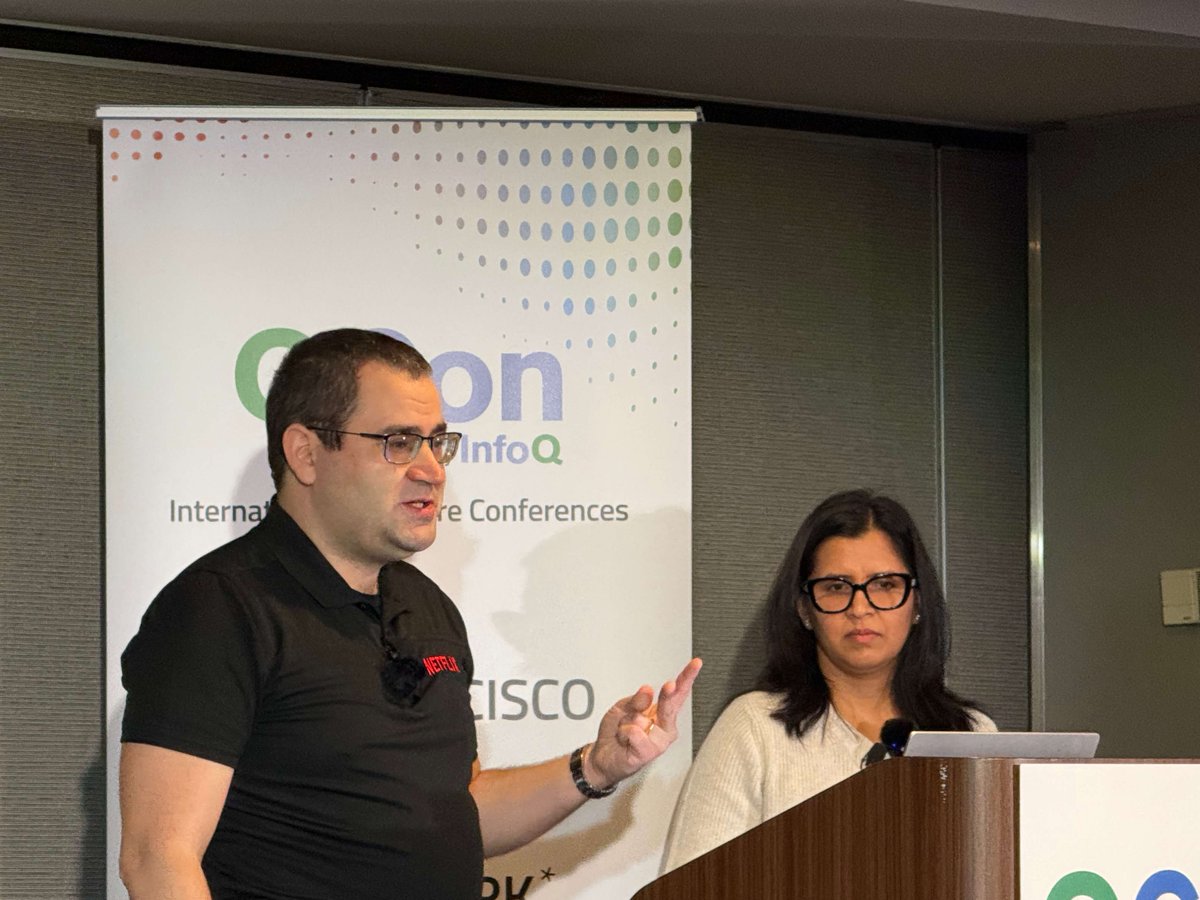
At @QCon right now, where Joey Lynch and Ayushi Singh from @NetflixEng are talking about how the folks who invented chaos testing use Antithesis. https://t.co/Of3tho48WH
Bombadil from Antithesis brings property-based testing to web and terminal UIs, and it's prety clever. You write properties your UI must always satisfy, and it explores the app (clicks, inputs, odd timings) hunting for states that break them.
https://t.co/Nn2VaRmTmK
Unit tests check the cases you thought of. Bombadil explores your UI on its own and checks the rules you care about. 🧪
What it is: property-based testing for web (and now terminal) UIs, from Antithesis. You write a TypeScript spec that exports properties ("this should https://t.co/96f1FgrIfZ
Since 2018, my handle @moarbugs has been a tongue-in-cheek reference to an enduring research agenda in automated testing. Now you can literally tell your agent “moar bugs” and walk away.
And to all who've asked how to get Antithesis without an enterprise contract: now you can! https://t.co/5RZmZyXhHJ
There are two factors that determine how much people will use a correctness tool:
1. How easy it is to use.
2. How much it actually helps with finding bugs.
These two form the tool's "strength-weight ratio". If a tool takes 1 hour of labor to find 10 bugs, it has the same ratio https://t.co/6gPSFP7bIe
This is f*cking insane. LangChain's agent engineering walkthrough:
"I think you will see the movement to this classic style of very simple tool calling agent in production"
In 32 minutes, LangChain builds every agent pattern from scratch: prompt chaining, routing, parallel https://t.co/OjTBV0tcfn https://t.co/v1Nu1cwO9V
"The code ran once" is not a reliability test.
Antithesis has launched a coding-agent plugin for setting up tests, creating workloads, investigating failures and checking fixes. Its demo below shows Claude testing HashiCorp Raft. That's a vendor demonstration, not a promise of https://t.co/4biCL498cg
A hundred UI test cases written, and users still find the bug first — what went wrong?
Hand-written UI tests only cover the paths you thought of. Real users always take the one you didn't, and every regression round turns into whack-a-mole.
Bombadil, from Antithesis, brings
Holy fuck. The AI industry's favorite podcaster has discovered that a chart of solved math problems predicts an explosion in autonomous AI research.
Dwarkesh, on June 26 you published an essay explaining why verifiability isn't enough. Research also needs cheap, repeatable https://t.co/yykR1gsuu3
Hi Oskar, I'm a really big fan of antithesis and have been using Hegel property testing a lot. I love using it. It's an awesome solution.
But the idea of Bombadil is yet to click for me. I've tried using it but I wasn't able to do anything good with it. Maybe I'm not using it
We’re thrilled to have @antithesishq on board as a co-host of Convergence Summit.
AI is writing more code than ever. Antithesis, the testing platform behind Jane Street, MongoDB and Ethereum, makes sure it doesn’t break.
Thank you for backing this edition.
13 Nov · Singapore https://t.co/d4fem6LqUv
it's a bit of everything
instead of advesarial we can:
- distributed simulation testing
- property based testing
- formal verification
I particularly like antithesis' bombadil for dom and hegel for the first twk https://t.co/pFjA3mRnWk
formal verification all the rage now but you're probably sleeping on deterministic simulation testing
there is too much software and too many failure modes that can't be very nicely modeled with formal methods
so you want deterministic simulation testing which is basically https://t.co/8z4fHAKVS8
Anatoliy Bilenko & Alberto Carretero gave a deep, technical presentation at Bug Bash Europe & @GOTOcon 2026 about how @Canonical combines executable state-machine designs and formal methods with AI-assisted development, observability, and Antithesis testing to go from validating
Antithesis raised $105 million at a $525 million valuation in late 2025 and is already considering another funding round at a substantially higher valuation.
Demand for its software-testing simulator is accelerating as companies write more code with AI.
Read more:
Antithesis raised $105 million at a $525 million valuation in late 2025 and is already considering another funding round at a substantially higher valuation.
Demand for its software-testing simulator is accelerating as companies write more code with AI.
Read more:
Replit is using Antithesis to simulate network failures, cyberattacks and other disasters that AI-generated code might not survive, The Information reports. Executives say demand is rising for software that stress-tests AI-built apps in ways humans wouldn't think to, including https://t.co/pVwPnVVyNI
Antithesis raised $105M at a $525M valuation in late 2025 and is already weighing another round at a much higher price, as AI-written code drives demand for its software-testing simulator, per The Information. More AI code, more bugs to catch. 🐛🧪🤖 https://t.co/K3Xux3eqAM
Antithesis raised $105 million at a $525 million valuation in late 2025 and is already considering another funding round at a substantially higher valuation.
Demand for its software-testing simulator is accelerating as companies write more code with AI.
Read more:
Antithesis raised $105 million at a $525 million valuation in late 2025 and is already considering another funding round at a substantially higher valuation.
Demand for its software-testing simulator is accelerating as companies write more code with AI.
Read more:
Tools that @vjkhannaripple mentioned:
- Antithesis: Fuzz testing, projects like Palantir use it.
- Depthfirst: AI pen testing, projects like Persona use it.
- Cantina AI: AI security screening, projects like Coinbase, Morpho, Aave and Uniswap use it.
A warm welcome to @AntithesisHQ as a Premier Partner ! 🦀
Antithesis is a deterministic simulation testing platform for distributed systems. They use Rust extensively, notably in their production database and guidance component.
Great to have you on board, Antithesis! ✨ https://t.co/2l6DEz8bhn
I'm excited for SPLASH/ISSTA 2026 this week!
If you wanna know what's cooking at Antithesis and why academia should tune in, I'll be giving a REBASE Industry Track on Wednesday at 1:30pm.
"Autonomous Testing with Time-Traveling Agents in a Chaotic Multiverse"
Preview: https://t.co/YGjXkwXMH1
3/ Antithesis · Applied AI Software Engineer, GTM
Vienna, VA or SF, onsite. $155k–$185k base + equity.
Build research, enrichment and scoring apps for sales. TypeScript, React, LangChain, AWS.
https://t.co/nKjbWgkjob
4/
Then there’s Antithesis.
Think of it as a powerful testing environment for distributed systems: it can simulate complex conditions and help developers reproduce failures.
In its May 2026 update, the Cardano Foundation reported that Antithesis management had moved from the